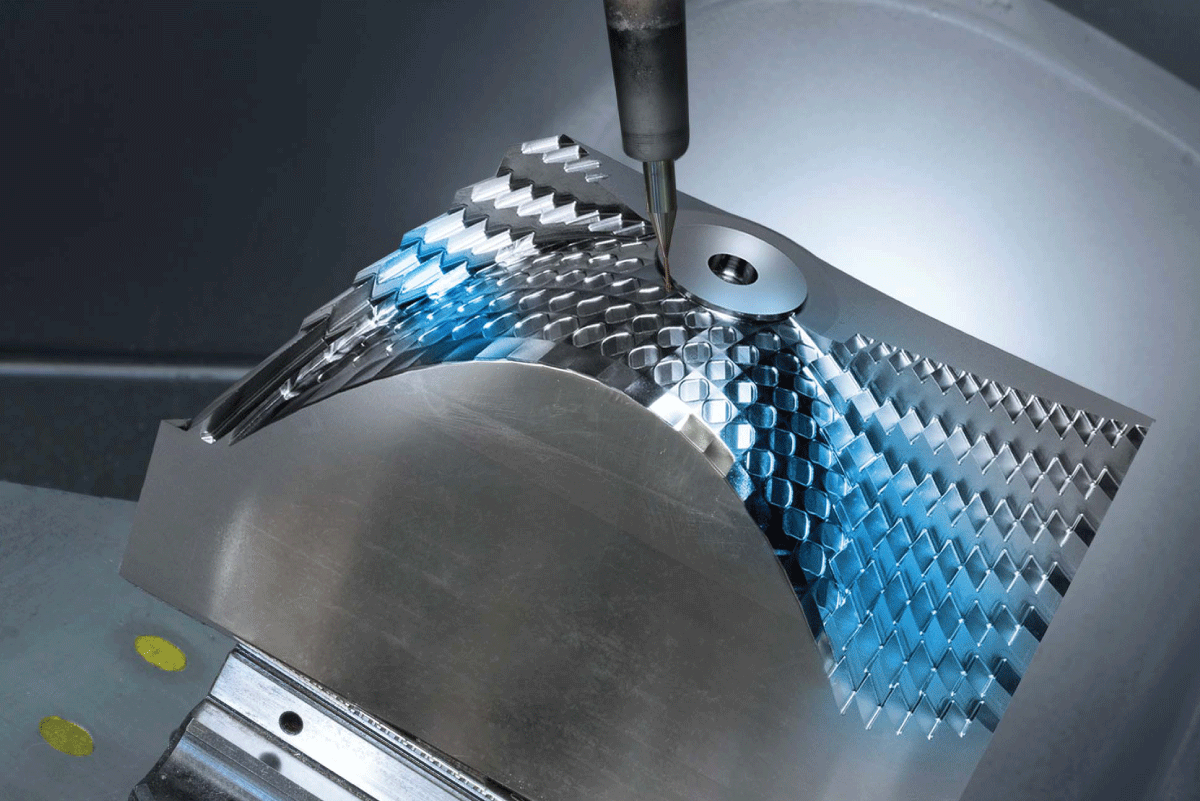
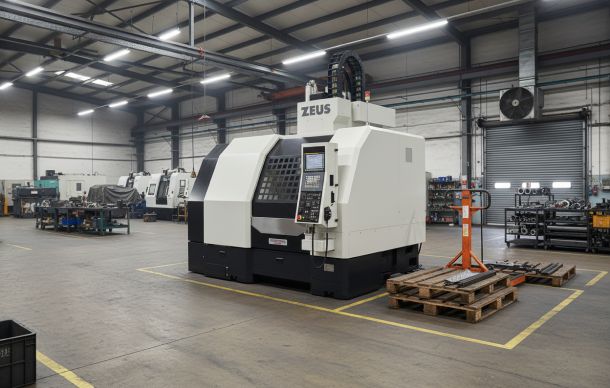
Linear Drive Milling Technology
When your work demands tolerances measured in microns, not thousandths, a conventional ball-screw machine simply isn’t enough. MC Machinery’s linear milling machine lineup eliminates the mechanical limitations of traditional drive systems, replacing them with direct linear motor technology that delivers unmatched speed, accuracy, and repeatability on every cut.
Whether you’re machining hardened tool steel, producing graphite electrodes, or chasing micro-fine surface finishes that other machines can’t touch, linear drive technology sets the standard.
How a Linear Motor Milling Machine Operates
A linear milling machine replaces the rotary-to-linear conversion of a traditional ball-screw drive with a direct linear motor drive system; essentially, a rotary motor that’s been “unrolled” into a flat plane. The result is direct, frictionless motion with no mechanical lag, no backlash, and no wear from screw threads.
Each linear drive milling machine features horizontally opposed flat linear motors with powerful magnets that cancel out attraction forces, paired with Heidenhain linear scales (2nm resolution) on all axes for real-time positional feedback. Advanced dual-layer cooling systems, combining direct forced-oil cooling with an in-line oil chiller, isolate heat from the spindle and casting, maintaining dimensional stability throughout long production runs.
The Fanuc 31i-B5 CNC controller ties it all together, providing AI Contour Control II, nano smoothing, and look-ahead block processing for complex 3D contour work.
Who Uses Linear Drive Milling
Linear drive milling machines show up wherever the margin for error is essentially zero. Here’s where they make the biggest impact.
Tool, Die & Mold Makers
Shops that traditionally relied on sinker EDM to machine hardened steel components are finding that a linear drive milling machine can eliminate that step entirely or dramatically reduce electrode usage before burning. Hardened steels that once required EDM are now cut directly, saving time and consumable costs.
Aerospace & Medical Device Manufacturers
In industries where a single out-of-tolerance part can ground a fleet or affect patient outcomes, positioning accuracy of ±0.000039 in. (±1.0 µm) and repeatability of ±0.0000079 in. (±0.2 µm) are requirements. Our linear motor milling machines meet those standards consistently, run after run.
High-Speed CNC Machining Shops
When you need to run complex 3D contours at rapid traverse speeds of 590 in/min. (15 m/min.), a linear drive milling machine keeps pace without sacrificing surface finish. Shops competing on lead time and part quality gain a measurable edge.
R&D and Prototyping Labs
New material development, rapid iteration on complex geometries, small-batch precision parts: the flexibility and accuracy of a linear drive milling machine make it the go-to platform for development work where repeatability across short runs matters as much as it does in production.
Benefits of Linear Drive Technology
Eliminating the mechanical intermediary between motor and table changes everything downstream, from part accuracy to maintenance costs to how long your machine holds its calibration.
- No backlash, no wear, no drift. Traditional ball-screw systems introduce backlash and wear over time, requiring recalibration. Linear motor systems have no contact between drive components, meaning the geometry you dial in on day one is the geometry you get years later.
- Faster feed rates with better surface finish. Because there’s no mechanical intermediary between the motor and the table, the linear drive milling machine can accelerate and decelerate with precision that ball-screw machines simply cannot replicate, translating to faster cycle times without compromising Ra values.
- Superior thermal stability. Heat is the enemy of precision. The dual-layer cooling architecture on MC Machinery’s linear drive machines (direct forced-oil cooling plus an in-line chiller) keeps thermal growth in check, protecting part accuracy during extended production runs.
- Accessible operation. Coupled with the Fanuc 31i-B5 controller and preprogrammed machining modes, these machines don’t require a 20-year veteran to run them well. New operators can produce high-quality results quickly.
Our Linear Drive Milling Machines
MC Machinery is the exclusive North American distributor for Roku-Roku and OPS Ingersoll precision milling equipment. All machines are inspected to the highest standards before delivery: laser compensation on all axes, dynamic spindle balancing, circularity and geometrical accuracy calibration, and hand-scraped construction. There are three linear drive milling machines in the lineup, each designed for a specific range of workpiece sizes and machining requirements.
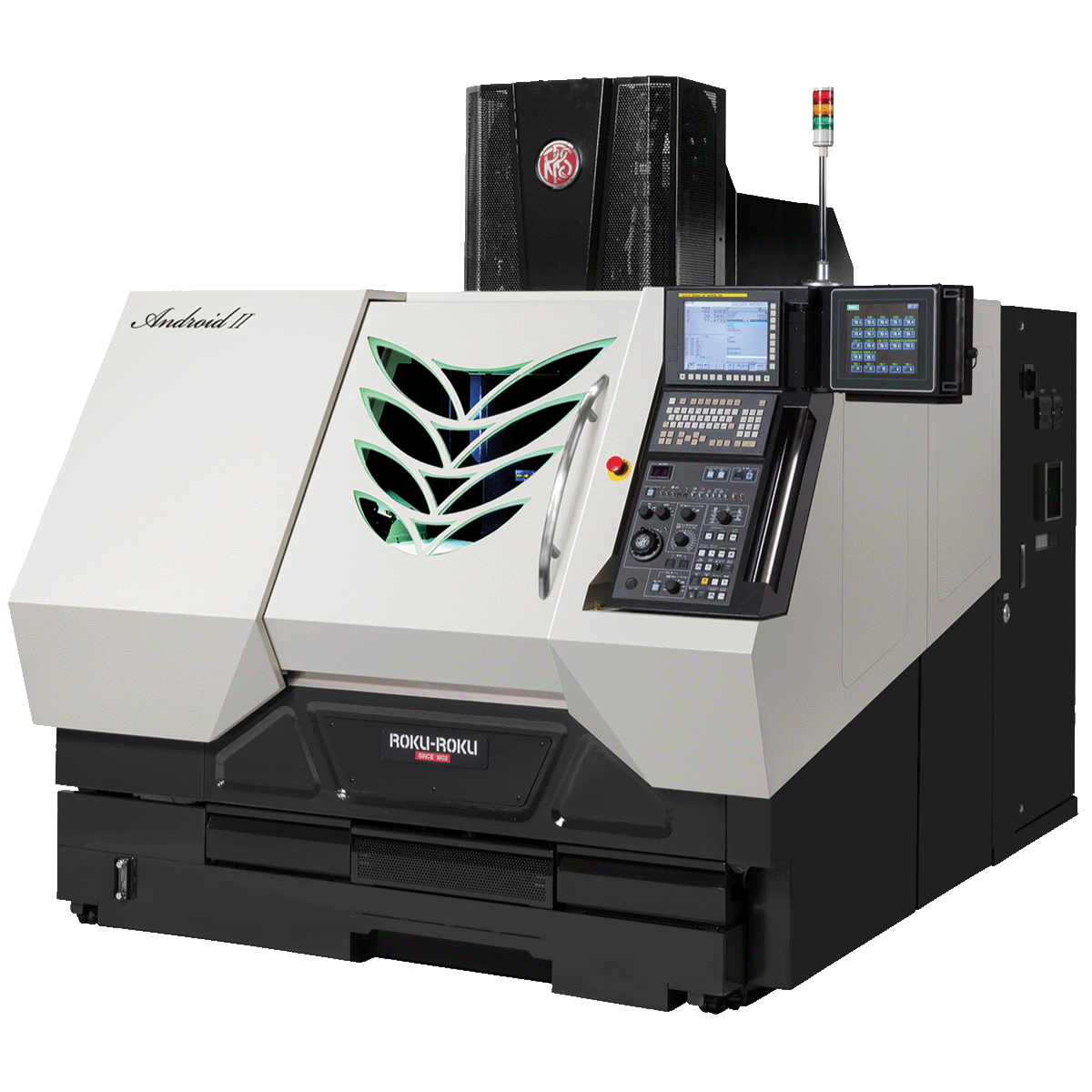
Roku-Roku Android II
The Roku-Roku Android II is the benchmark for micro-fine, high-speed hard steel machining in a compact footprint. Built around a 60,000 RPM integral spindle and a full X/Y/Z linear motor drive system, it’s designed for precision electrode work, mold components, and any application where micron-level tolerances are non-negotiable.
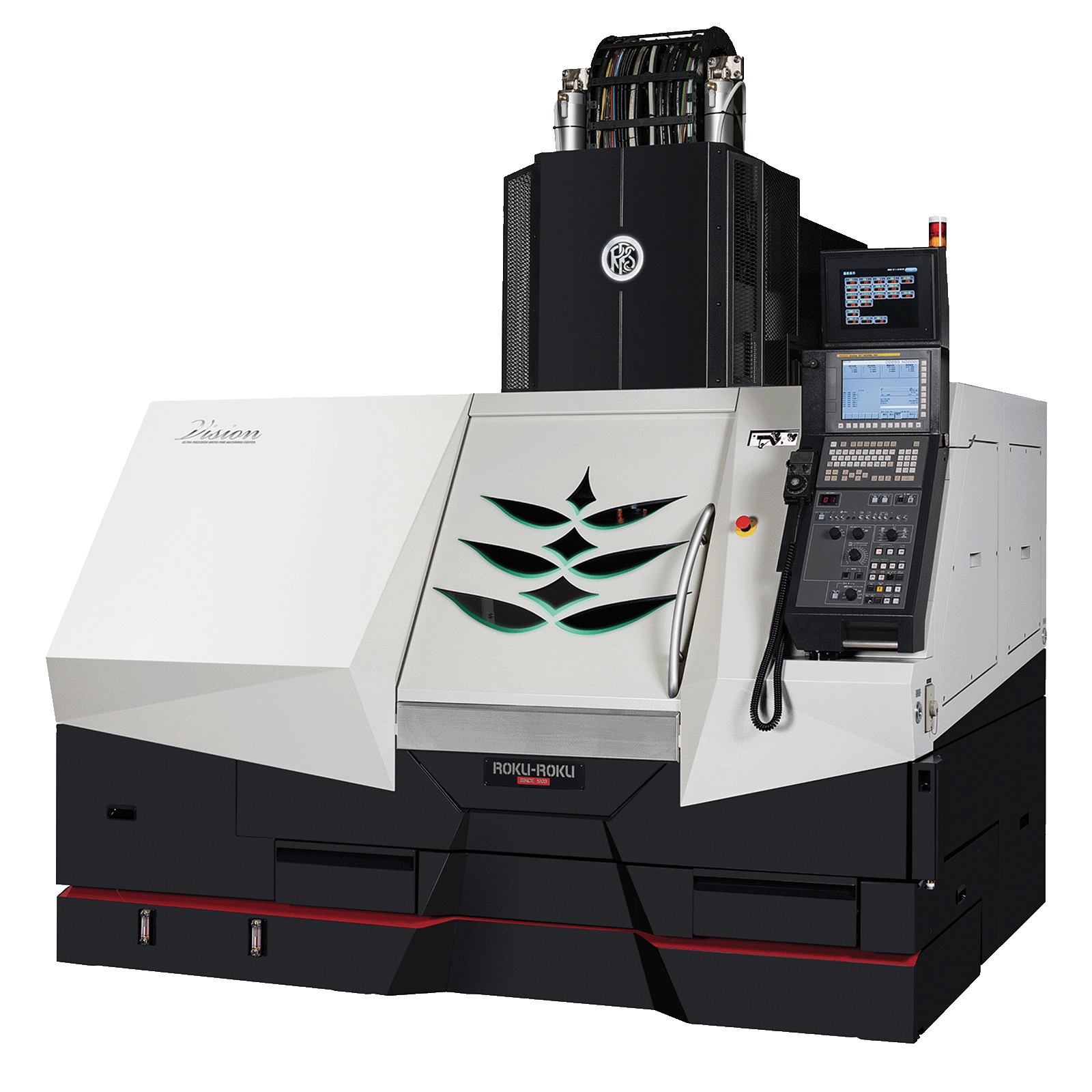
Vision 300
The Vision 300 brings the same linear motor drive architecture to a larger work envelope, with a 20 HP, 30,000 RPM spindle capable of handling workpieces up to 660 lbs. It’s the right choice for shops that need the precision of a linear drive milling machine on larger mold components, dies, and structural aerospace parts.
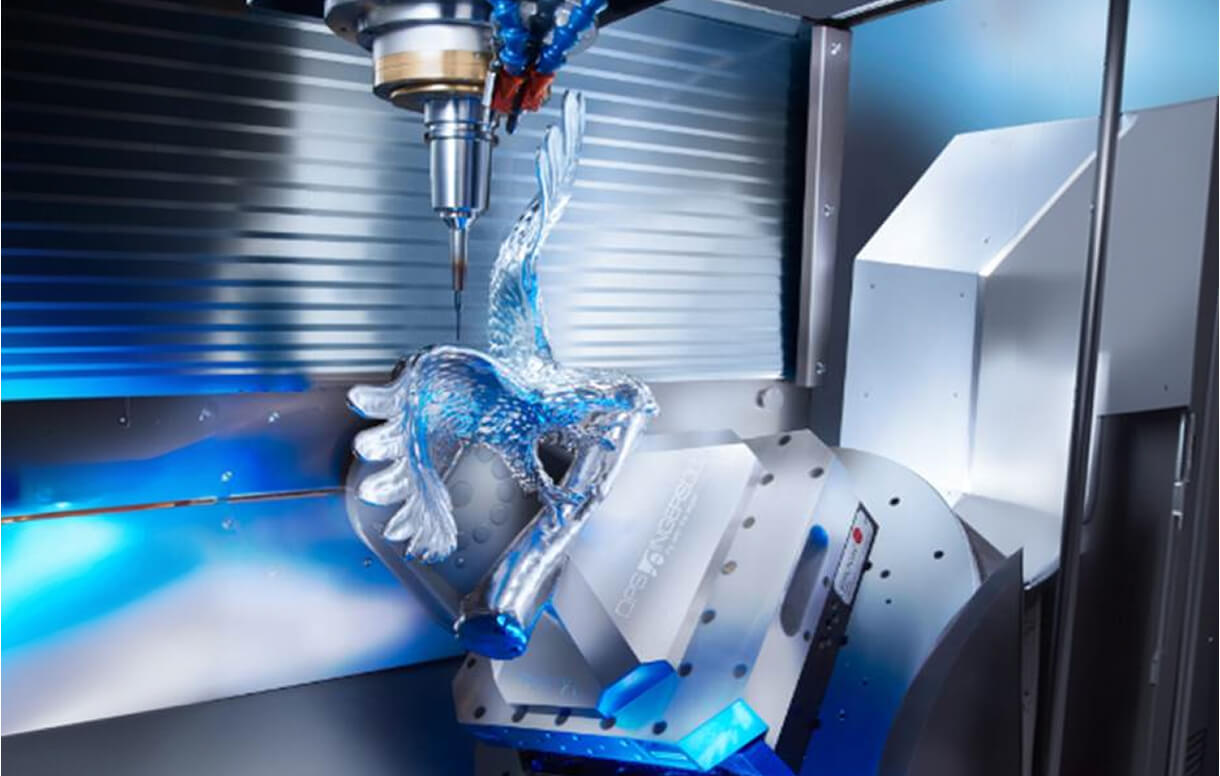
Android II 5AXP-DD
The 5AXP-DD pairs the Android II’s linear motor precision with full 5-axis simultaneous machining capability via an integrated Tsudakoma direct drive 2-axis rotary table, which is ideal for shops that need to machine complex geometries in hardened materials to exacting tolerances in a single setup.
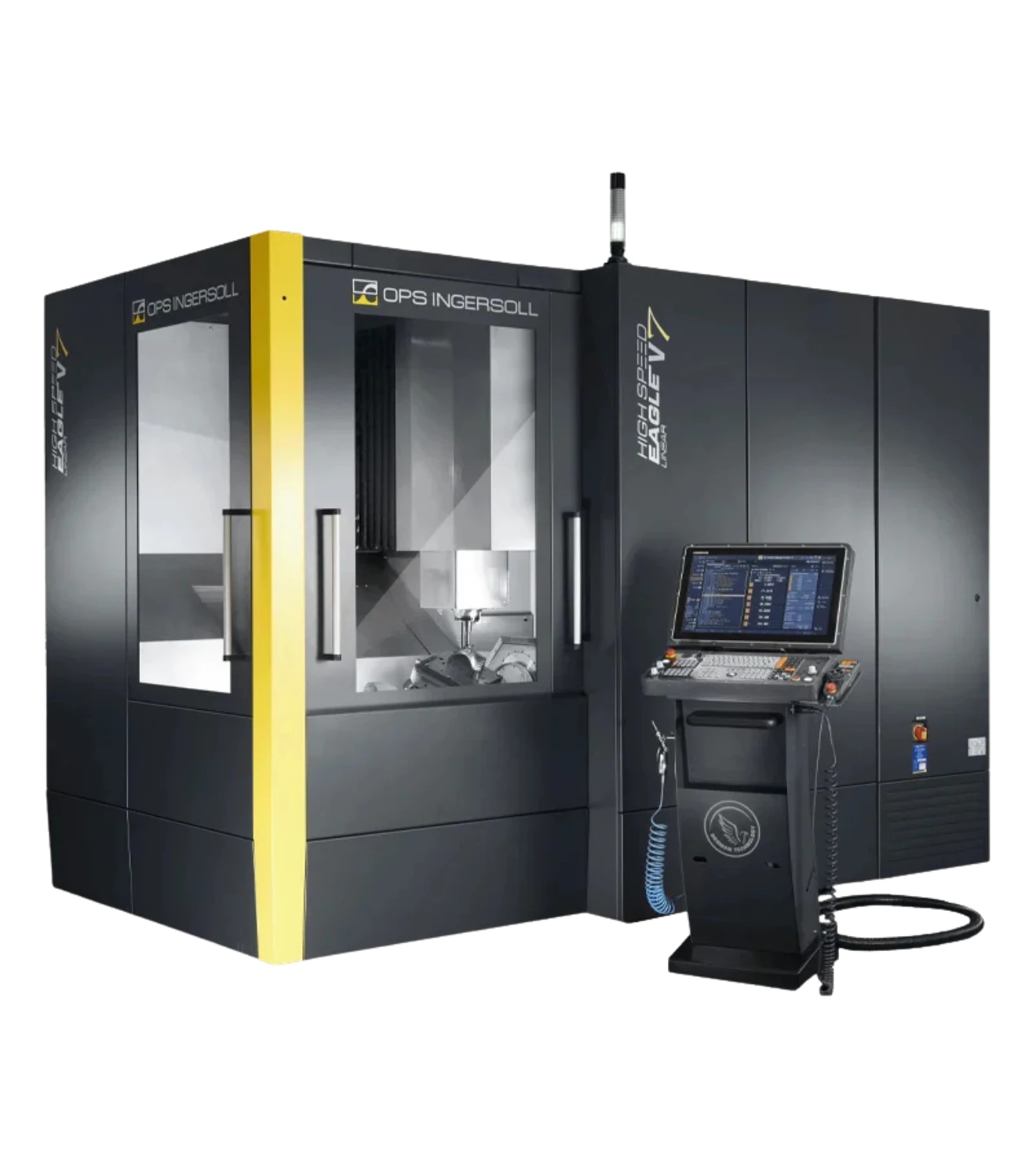
Eagle V7G
The OPS Ingersoll V7G Linear delivers ultra-fast linear drive technology and micron-level accuracy for high-precision graphite, steel, and mold machining.
Technical Specifications
| Roku-Roku Android II | Vision 300 | Android II 5AXP-DD | |
|---|---|---|---|
| Machine Travels (X x Y x Z) | 17.7″ x 13.8″ x 7.9″ | 25.6″ x 21.6″ x 11.8″ | 17.7″ x 13.8″ x 7.9″ |
| Spindle Speed | 3,000–60,000 RPM | 200–30,000 RPM | 3,000–60,000 RPM |
| Spindle HP | 5.0 | 20.0 | 5.0 |
| Positioning Accuracy | ±0.000039 in. (±1.0 μm) | ±0.000039 in. (±1.0 μm) | ±0.000039 in. (±1.0 μm) |
| Repeatability | ±0.0000079 in. (±0.2 μm) | ±0.0000079 in. (±0.2 μm) | ±0.0000079 in. (±0.2 μm) |
| Rapid Traverse | 590 in/min (15 m/min) | 590 in/min (15 m/min) | 590 in/min (15 m/min) |
| Linear Scales | Heidenhain 2nm | Heidenhain 2nm | Heidenhain 2nm |
| Max. Workpiece Weight | 220 lbs (100 kg) | 660 lbs (300 kg) | 66 lbs (30 kg) |
| Rotary Table | – | – | Tsudakoma DD, 5.9″ dia. |
| Axes | 3 | 3 | 5 (simultaneous) |
| Control | Fanuc 31i-B5 | Fanuc 31i-B5 | Fanuc 31i-B5 |
| Tool Changer | 20-pos. standard | 20-pos. standard | 20-pos. standard |
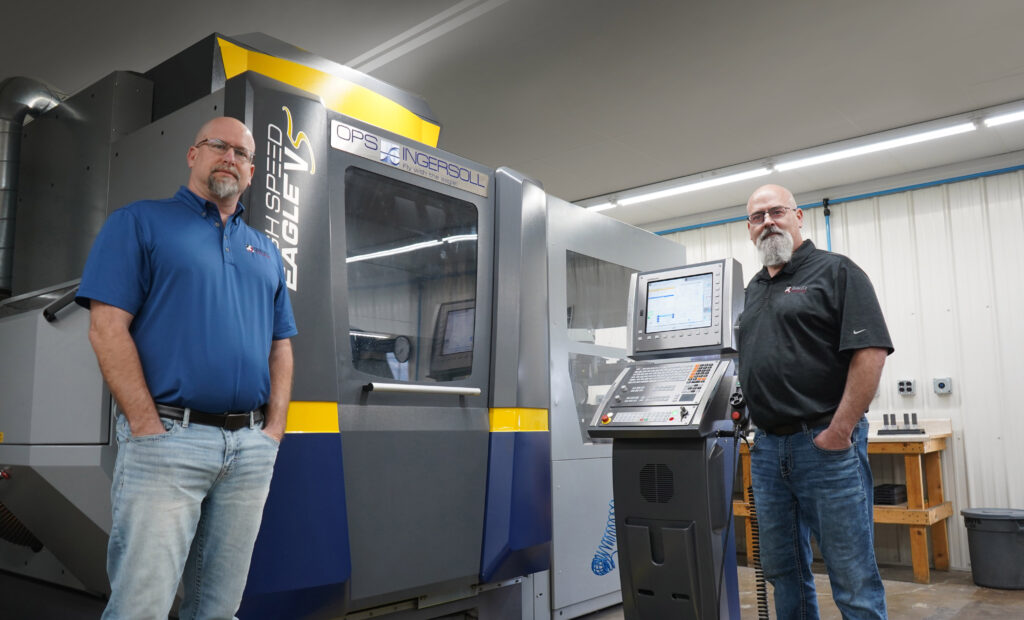
See What Linear Drive Technology Can Do for Your Shop
MC Machinery’s application engineers can schedule a demo, arrange a test cut on your actual part material, or walk you through which linear motor milling machine configuration fits your production requirements. Backed by MC Machinery’s Triple Diamond service program and a regionalized network of factory-trained technicians, you’ll have the support to run confidently from day one.